India is known worldwide for its rich culinary heritage and diverse spice culture. From turmeric and coriander to red chili and garam masala, spices play an essential role in every kitchen. As consumer demand for packaged and hygienically processed spices continues to grow, establishing a masala manufacturing unit has become one of the most promising opportunities in the food processing industry.
spice market is expanding rapidly because consumers increasingly prefer ready-to-use products that offer convenience, consistent quality, and longer shelf life. Consequently, entrepreneurs are exploring opportunities in spice processing and packaging businesses.
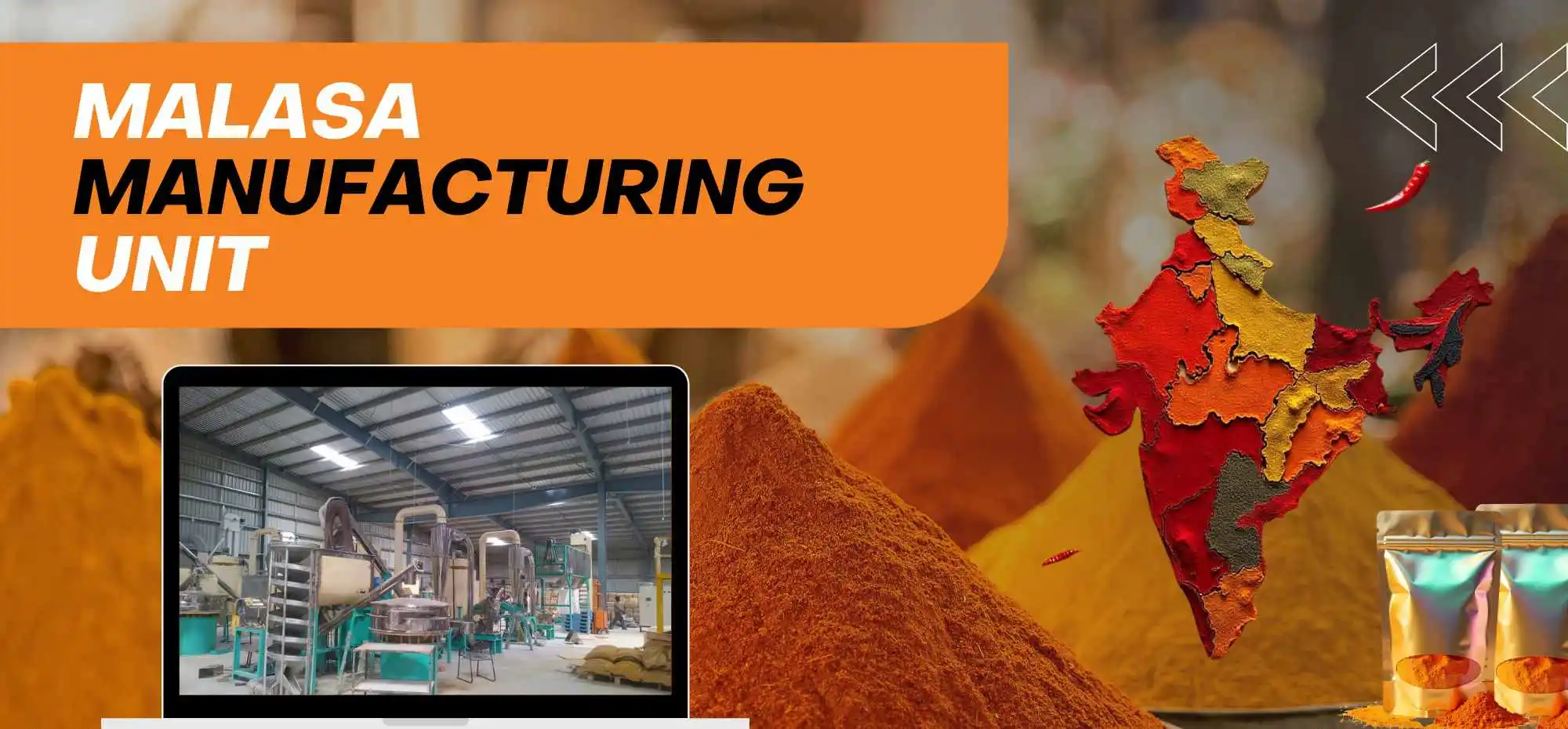
Whether you are a new entrepreneur, a food processing investor, or an existing manufacturer looking to diversify your operations, understanding the requirements of a modern spice processing facility is crucial. This guide covers everything from machinery and production processes to investment considerations and growth strategies.
masala manufacturing unit is a production facility designed to clean, grind, blend, process, and package various spices into finished products suitable for commercial sale.
Typically The facility typically handles raw spices such as:
Thereafter The processed products are then sold as single spices or blended spice mixes in retail and wholesale markets. Moreover Modern facilities use advanced processing equipment to ensure hygiene, consistency, and product quality. As a result, businesses can meet increasing consumer expectations while complying with food safety standards.
The Indian spice industry continues to experience strong growth due to several factors.
Consumers increasingly prefer branded and hygienically packed spices. Therefore, the demand for processed spice products remains consistently high.
Restaurants, hotels, catering businesses, and food manufacturers require large volumes of spices every day. Consequently This creates significant opportunities for commercial suppliers.
Indian spices enjoy global recognition. Furthermore, manufacturers can access international markets and increase revenue streams.
Unlike seasonal industries, spices are consumed throughout the year. As a result, businesses benefit from continuous market demand.
A small facility can gradually expand into a medium or large-scale operation as demand grows. Therefore, entrepreneurs can start with a manageable investment and expand later.
The global spice industry continues to grow due to changing consumer preferences and increasing demand for processed food products.
Moreover Several market segments offer excellent opportunities:
Packaged spices sold through supermarkets, grocery stores, and online platforms.
Similarly, Bulk supplies to traders and distributors.
Restaurants, hotels, canteens, and catering companies.
Likewise, ready-to-eat food producers and packaged food companies purchase spices in large quantities.
International buyers seeking high-quality Indian spices.
Because of these multiple sales channels, entrepreneurs can diversify their customer base and reduce business risks.
Export-oriented businesses can access market insights and export guidelines through the national spice export authority.
The success of a spice processing facility begins with sourcing quality raw materials.
Generally, Common raw materials include:
Choosing premium-grade raw spices directly impacts product quality, flavor, aroma, and customer satisfaction.
Understanding the production workflow helps improve efficiency and product consistency.
Firstly, High-quality spices are purchased from farmers, traders, or wholesale markets.
Next, Spices are dried to achieve the required moisture level for efficient grinding.
Afterward, The spices are converted into fine powder using a masala grinding machine.
To grind spices into a uniform fine powder and extend their shelf life, the spices are sifted. This process completely separates the fine powder from the coarse particles.
Then, Multiple ingredients are mixed according to specific formulations.
Meanwhile, Products are checked for particle size, aroma, moisture content, and purity.
Thereafter Finished products are packed into pouches, jars, or bulk packaging.
Finally Products are stored under controlled conditions before shipment.
Selecting the right equipment directly affects production capacity and product quality.
Firstly Remove moisture from spices using tray dryer to extend their shelf life, improve quality, maintaining aroma and prepare them for fine grinding without burning.
Afterward masala grinding machine is one of the most important pieces of equipment in the production line. It converts whole spices into uniform powder while maintaining aroma and quality.
Key benefits include:
So Pulverizer is used to grind tough spices like turmeric, dry ginger, and cinnamon into fine powder. This machine delivers high-quality grinding without losing the aroma or burning the spices
Then separates oversized particles from the powder in vibro sifter machine to ensure a uniform texture, which enhances both consistency and quality
This machine blends different spices evenly. You can use it to create any formulation by mixing two or more spices together
Thereafter, Automates filling, sealing, and packaging processes.
Selecting the appropriate Spice grinding machine depends on several factors.
Afterward Investing in reliable machinery often results in long-term operational benefits.
Many entrepreneurs research masala machine price before starting operations. However, pricing varies significantly depending on several factors.
Rather than focusing just on the initial masala machine price, businesses should evaluate long-term performance, efficiency, and return on investment.
The required facility size depends on production capacity.
The facility should include:
Proper layout planning improves workflow efficiency and reduces material handling costs.
To operate legally, businesses should obtain necessary approvals.
Compliance builds customer trust and supports long-term business growth.
Investment requirements vary depending on business scale.
Major cost components include:
Entrepreneurs should develop a detailed project report before making investment decisions.
A properly managed spices manufacturing unit can generate attractive profit margins.
Several factors influence profitability:
Businesses that focus on quality and consistency often achieve sustainable growth.
Packaging plays a critical role in product success.
Effective packaging helps:
Modern consumers often evaluate product quality based on packaging presentation.
Several emerging trends are shaping the future of spice processing.
Businesses that adapt to these trends gain a competitive advantage.
Technology has transformed spice processing operations.
A modern masala making machine offers:
Consequently, manufacturers can produce premium-quality products while maintaining efficiency.
In conclusion Starting a masala manufacturing unit can be a rewarding business opportunity in today’s growing food processing sector. The increasing demand for hygienically processed and packaged spices creates excellent prospects for entrepreneurs willing to invest in quality production systems.
Moreover Success depends on multiple factors, including raw material quality, efficient processing methods, reliable machinery, regulatory compliance, and effective marketing strategies. Furthermore, selecting the right equipment, including a high-performance masala making machine, helps ensure consistent product quality and operational efficiency.
As consumer demand continues to rise in both domestic and international markets, Ultimately businesses that focus on quality, innovation, and customer satisfaction are well-positioned for long-term growth and profitability in the spice processing industry.
Masala manufacturing unit is a facility that processes, grinds, blends, and packages spices for commercial sale.
Masala grinder machine is one of the most important machines because it converts whole spices into fine powder.
Space requirements depend on production capacity and operational scale.
Yes. A well-managed spices manufacturing unit can achieve attractive profit margins due to strong market demand.
Capacity, automation level, construction quality, technology features, and customization influence equipment pricing.
© 2023 Samtek Engineering And GIS Solutions Private Limited