Dal Mill Plant Used in Various Industries:
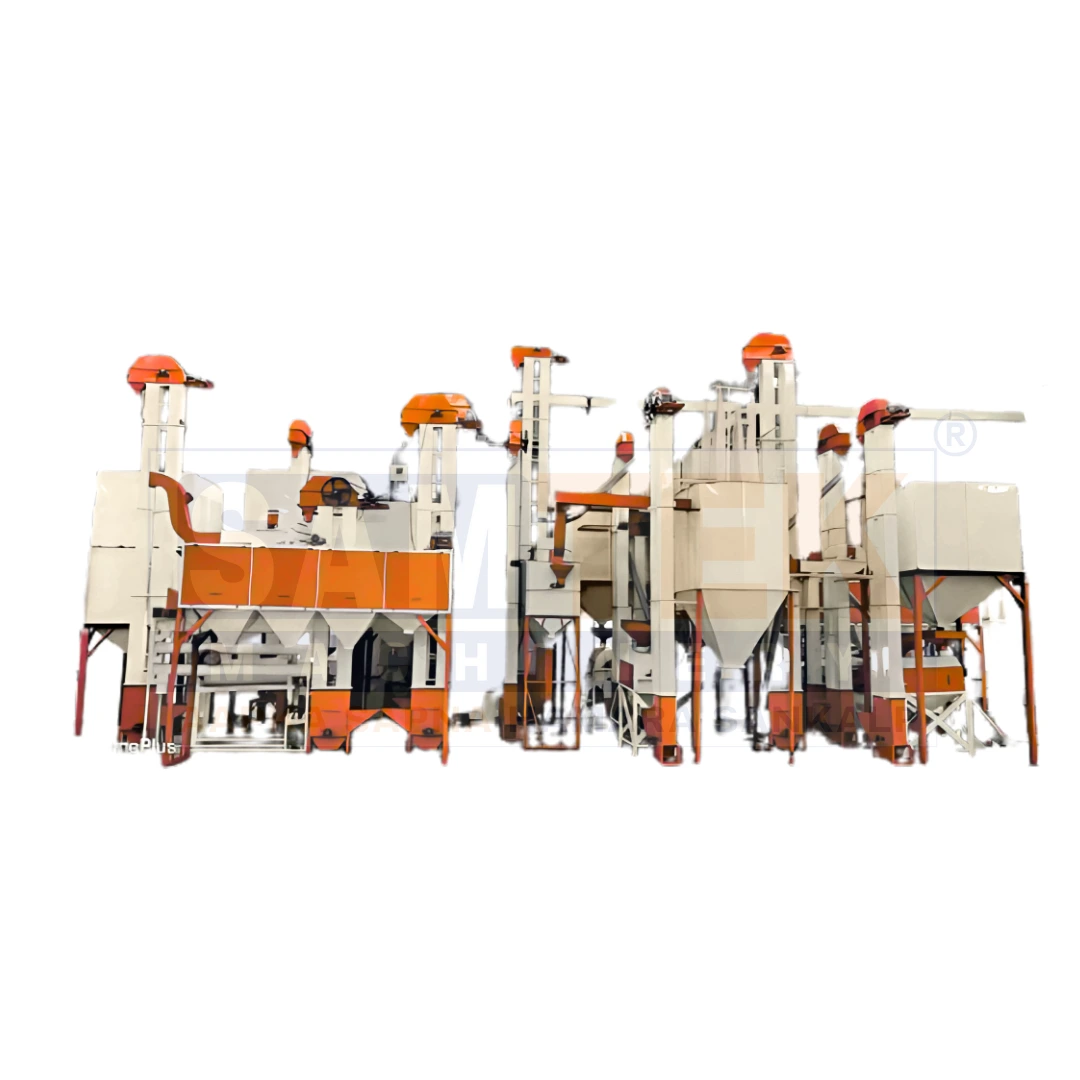
Samtek Machinery offers a reliable dal mill plant for businesses involved in commercial pulse processing. Our automatic system is designed to clean, dehusk, split, grade, and process different types of pulses with consistent output and minimum manual work.
Our plant can process pulses such as chana dal, toor dal, moong dal, urad dal, masoor dal, and other commonly processed pulses. With production capacities from 500 kg/hr to 2,000 kg/hr, plant configured according to your production requirements, available space, and business investment plan.
If you are planning to start or expand a pulse processing business, Samtek Machinery provides complete plant solutions, technical guidance, installation support, and after-sales assistance.
Automatic dal mill plant combines multiple processing stages into one organized production system. It reduces manual handling and helps maintain consistent processing quality.
Depending on the selected configuration, the processing line can include:
Exact machinery configuration depends on the type of pulse, required capacity, product quality, and level of automation.
Process starts with the feeding of raw pulses into the processing line. Pulses then pass through cleaning and separation equipment to remove dust, stones, foreign particles, and other impurities.
After cleaning, the pulses undergo conditioning and dehusking. The dehusked pulses are then split and separated. Grading equipment helps classify the processed dal according to size and quality.
A typical processing flow is:
Raw Pulse → Cleaning → Destoning → Conditioning → Dehusking → Splitting → Separation → Grading → Polishing → Final Dal
This integrated process helps reduce manual handling and provides a more organized production workflow.
Properly configured dal mill plant can be designed for processing different pulses.
Chana or chickpeas can be processed through cleaning, conditioning, dehusking, splitting, grading, and polishing stages.
Toor dal requires suitable conditioning and dehusking equipment to achieve efficient splitting and good product recovery.
Moong can be processed through controlled cleaning, dehusking, splitting, separation, and grading stages.
Urad dal processing requires appropriate dehusking and splitting arrangements according to the desired product quality.
Masoor can also be processed using a suitable pulse milling configuration based on the required capacity and final product specifications.
Dal mill plant cost is not the same for every project. It depends on several technical and business factors.
Important cost factors include:
For this reason, it is better to select the plant according to your required production capacity instead of choosing a machine only on the basis of price.
Samtek Machinery can evaluate your production requirement and recommend a suitable configuration before you invest.
Fully automatic dal mill plant price depends on the capacity, automation level, machinery configuration, and additional equipment required for your project.
A higher-capacity plant generally requires more processing equipment, higher connected load, and a larger production area. Similarly, adding automated feeding, grading, polishing, packing, and material handling systems can change the overall project investment.
Therefore, there is no single processing unit that applies to every business.
For an accurate quotation, share your:
Our team can then suggest the right configuration and provide a project-specific quotation.
Samtek Machinery is a dal mill plant manufacturer providing food processing machinery and complete plant solutions for entrepreneurs and established businesses.
We focus on understanding the customer’s production requirement before recommending the machinery configuration. This approach helps avoid unnecessary equipment and allows the plant to be planned according to actual business needs.
Samtek started its operations in 2013 and has an in-house manufacturing unit in Ghaziabad. The company also provides turnkey project support and consultancy for food processing businesses.
Our support can include:
Choosing the right dal mill plant manufacturer is important because the plant needs to deliver consistent performance over the long term.
We design plant configurations according to production capacity, pulse variety, factory space, and business requirements.
Our team helps you understand the machinery, processing flow, capacity requirements, and plant setup before investment.
Our machinery is manufactured with attention to durability, production performance, and food processing requirements.
We provide installation and commissioning assistance so that the plant can be properly set up at your location.
Our team provides technical assistance to help customers maintain smooth plant operation.
dal processing machinery can be suitable for several types of businesses, including:
Right plant size should be selected according to expected production volume, available raw material, market demand, and investment capacity.
Our dal processing plant can provide several operational advantages compared with a highly manual processing setup.
Before installing a processing unit, several factors should be considered.
Available area should be sufficient for machinery installation, raw material storage, finished product storage, electrical systems, and operator movement.
Electrical load depends on the selected plant capacity and machinery configuration. Our current plant range is specified from approximately 21.75 kW to 75.75 kW.
Type and quality of pulses affect the processing configuration and final output.
Depending on the selected processing method and plant configuration, utility requirements should be planned before installation.
If you want an end-to-end production line, packing equipment can be integrated according to your required pouch size and packing speed.
Starting a pulse processing business requires more than simply purchasing machinery. The plant capacity, processing flow, raw material, factory space, electrical load, and expected market demand should all be considered before investment.
Samtek Machinery helps entrepreneurs evaluate these requirements and select a suitable dal mill plant configuration.
Whether you need an automatic setup for a growing business or a higher-capacity commercial plant, our team can help you plan the machinery according to your production goals.
Talk to our experts today to discuss your dal processing requirement and get a customized quotation.
We Are Always Here To Assist You
+91-7822813451
info@samtekmachinery.comsales@samtekmachinery.com
D-16, BS Road Industrial Area, Lal Kuan, Ghaziabad-201001, Uttar Pradesh, India
Dal mill plant is a food processing system used to clean, dehusk, split, separate, grade, and polish pulses to produce finished dal.
Samtek Machinery currently offers configurations with production capacities ranging from 500 kg/hr to 2,000 kg/hr, depending on the selected plant design.
Processing unit cost Depends on production capacity, automation level, pulse type, machinery configuration, and optional equipment. A customized quotation is required for an accurate project cost.
Fully automatic dal mill plant price varies according to capacity and the equipment included in the processing line. Contact Samtek Machinery with your requirements for a project-specific quotation.
Plant can be configured for pulses such as chana, toor, moong, urad, masoor, and other pulse varieties according to the required processing method.
Yes. Samtek Machinery provides food processing machinery and complete plant solutions, including automatic dal mill plant systems, with manufacturing and project support from Ghaziabad, Uttar Pradesh.
Yes. Plant capacity and equipment configuration can be customized according to your production requirement, pulse type, available space, and business plan.
Yes. Samtek provides plant installation and technical support as part of its complete project solutions.
© 2023 Samtek Engineering And GIS Solutions Private Limited