India is known as the “Land of Spices,” making the spice business a lucrative venture for entrepreneurs. With a rich history of spice trade and a growing demand for Indian spices worldwide, India produces 75 out of 109 listed spices in the world that is almost 70% of the total production. starting a spice business in India can be a rewarding opportunity. This guide will walk you through the steps to establish your own spice business successfully.

Before diving into the spice business, conduct thorough market research. Identify the most in-demand spices, potential competitors, and target markets. Determine whether you want to start as a wholesaler, retailer, exporter, or online seller.
Popular spices: Turmeric, Chilli, Cumin, Coriander, Cardamom, Clove, Black Pepper, etc.
Domestic vs. Export Market: Identify whether you will cater to local consumers or international buyers.
Competition Analysis: Study existing spice brands and their pricing, packaging, and distribution.
To start a spice business in India, you need to comply with legal and regulatory requirements:
Business Registration: Register your business as a sole proprietorship, partnership, LLP, or private limited company.
FSSAI License: Obtain a food license from the Food Safety and Standards Authority of India (FSSAI).
GST Registration: Register for Goods and Services Tax (GST) to conduct business legally.
MSME Registration: Register under the Micro, Small, and Medium Enterprises (MSME) scheme for government benefits.
Export License: If you plan to export, obtain an Import-Export Code (IEC) from DGFT.
Choosing the right location depends on the scale of the business and budget.
It is preferable to choose a location in your city because you know the actual rates of the area to rent there.
Above all, you already have a link with the retailers and suppliers of your city.
For setting up a spice processing unit in India, you require a recommended area of 700 – 2000 sq. Feet depend on plant & production.
Quality is key in the spice business. You can source raw spices directly from farmers, agricultural markets (mandis), or wholesale suppliers. Ensure proper quality checks before procurement to maintain consistency.
Spices require drying, grinding, separation, mixing and packaging before they are ready for sale. You can set up a small processing unit or outsource the manufacturing process.
Processing Unit: Invest in grinding and blending machines if you plan to manufacture spices.
Hygiene & Quality Control: Follow FSSAI guidelines for hygiene and food safety.
Attractive Packaging: Use moisture-proof, air-tight, and eco-friendly packaging to retain freshness.
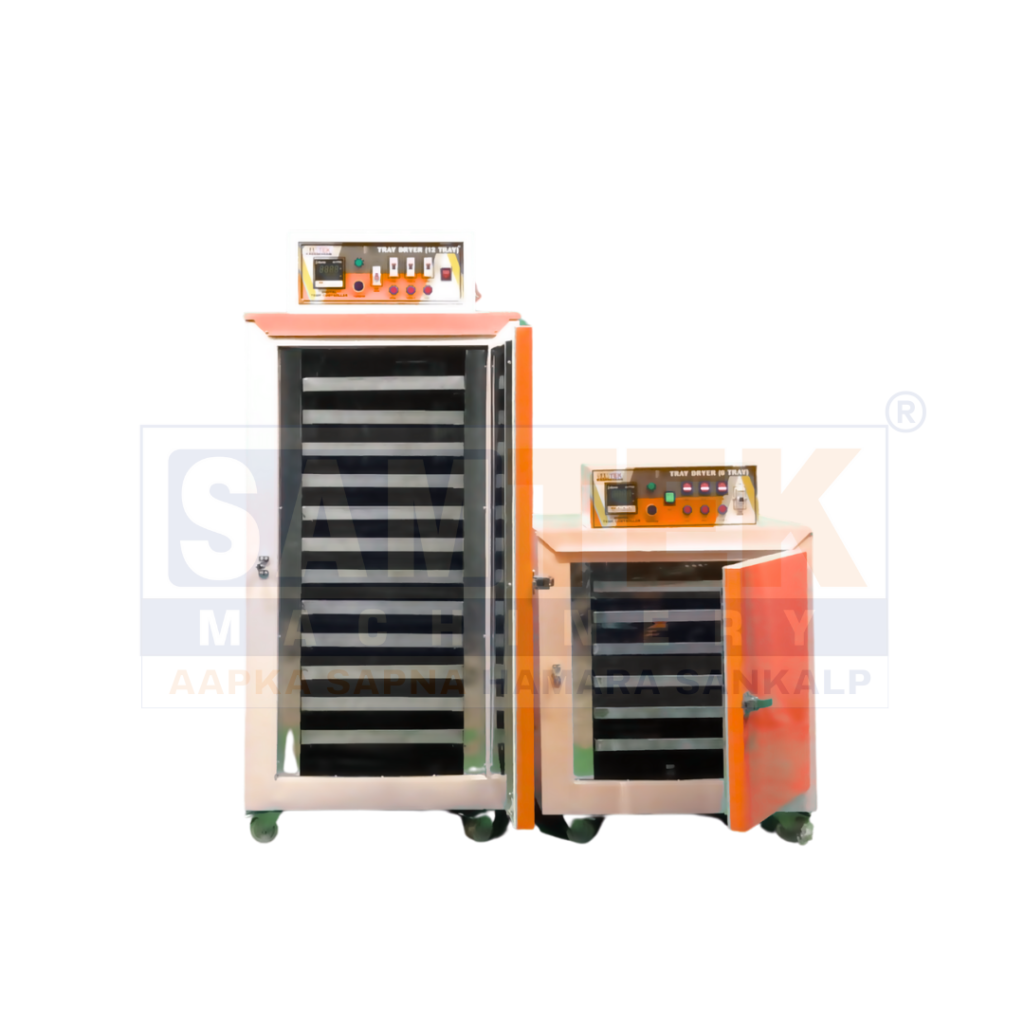
Use Tray dryer/Continuous dryer Samtek machinery designed for Spice Draying & remove Moisture and impurities from spices. enhances flavor, and extends shelf life while maintaining the natural quality of the product.
Tray Dryer design 6 variant for small scale business.
Continuous Dryer design for large scale businesses.
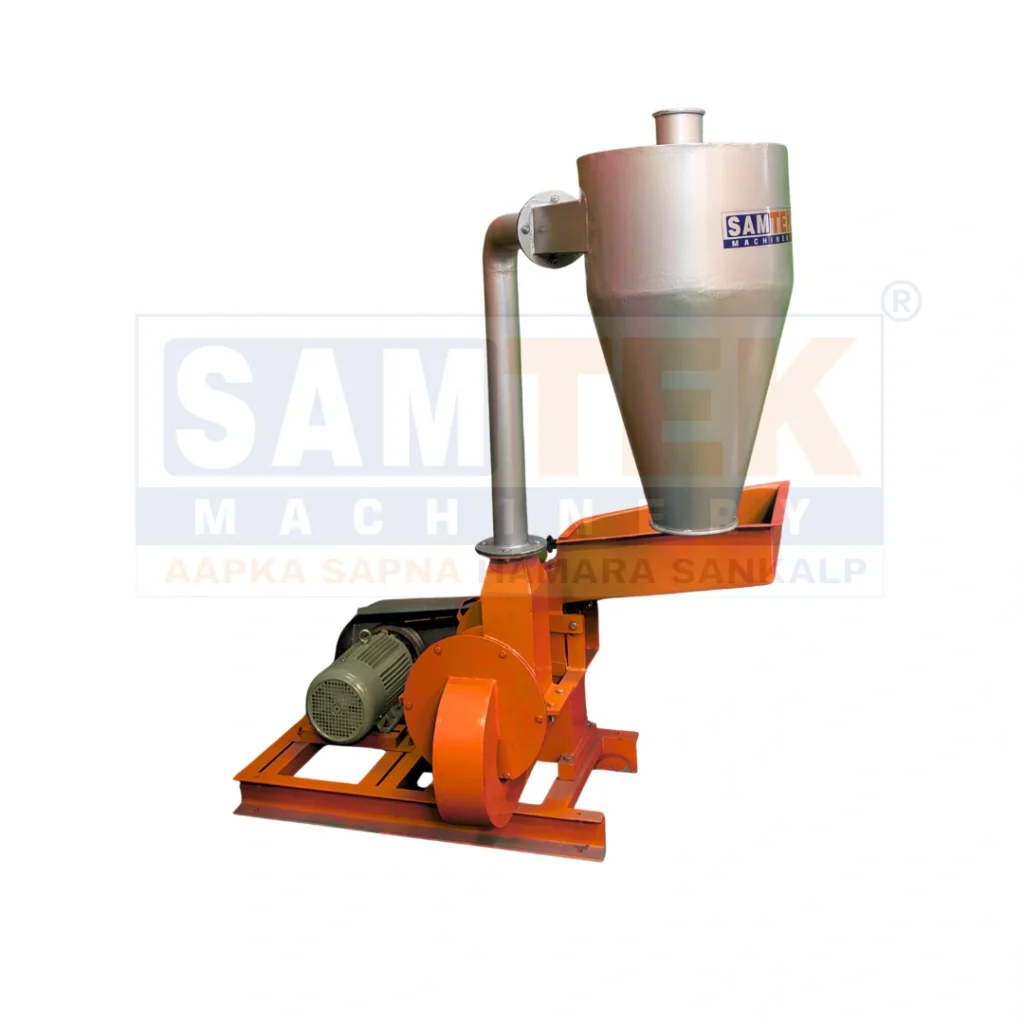
Samtek Machinery is designed Spice grinding machine for grinding Spices fine and consistent powder output. this machine use all light spice grind eg. chili, coriander, cumin, black pepper, cardamom, cloves, and more.
Impact Pulverizer design for hard spices Grinding eg. turmeric, ginger, Sonth & more.
Samtek Machinery is designed Vibro Sifter for Separation Spices precise particle separation, high efficiency, and uniform high quality.
Vibro sifter designed 3 types Single deck, double deck & ball tray.
Ribbon Blender For blending & mixing Spices Samtek machinery designed Ribbon Blender for uniform mixing of powders, granules in high efficiency, and precision.
uniform blending of ingredients.
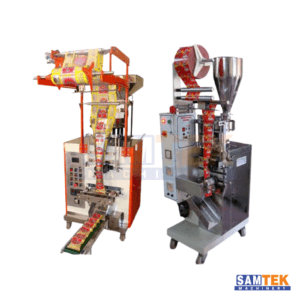
Packaging machine is designed for Spice packaging efficient and precise packaging reduce labor costs, and ensure consistent packaging quality.
It ensures speed, accuracy, and consistency in packaging process.
After that, for packing the masala’s, you will need:
After finding the perfect location, it is time to get the funds and investments for the masala factory project cost.
To start a spice business in India, you will require a minimum of Rs.5 lacs- Rs. 20 lacs as the initial investment. as per production and plant.
But before estimating the investment required, shortlist your expenses to run the masala business for 2 years. At least, until you start establishing your presence and earn profits.
After estimating the fund requirement for the masala business, here are some sources of finance that could help you:
A strong brand identity will help differentiate your spice business in the market. Focus on:
Brand Name & Logo: Create a catchy and easy-to-remember brand name.
Online Presence: Sell through e-commerce platforms like Amazon, Flipkart, and your website.
Social Media Marketing: Use Instagram, Facebook, and YouTube to promote your products.
Retail & Wholesale Channels: Supply to supermarkets, grocery stores, and hotels.
Decide how you want to sell your spices. You can opt for offline retail, wholesale distribution, or online sales through e-commerce and export markets. Ensure a strong logistics and supply chain network to reach customers efficiently.
Indian spices are used globally in a very impressive quantity. In fact, the masala business industry is growing by Rs. 40,000 crores every year. As a result, it is giving high returns on low investment.
Not only this but, even if an individual starts a masala business from home, they can earn good profits in a short period.
Above all, even the domestic demand for spices are very high in Indian households that you do not need to look for foreign markets.
So, it is clear that the spice industry definitely has a good scope with a growth rate of 15% every year with a very promising future.
Therefore, if you have a great strategy and good marketing, your success in the industry is certain.
Once your business gains traction, consider expanding your product range to include spice blends, organic spices, and ready-to-use masalas. You can also explore export opportunities to countries with a high demand for Indian spices.
Starting a spice business in India requires careful planning, quality sourcing, and effective marketing. With the right approach and commitment, you can build a successful brand and tap into the ever-growing spice market. Whether you start small or aim for large-scale operations, the spice business holds immense potential for growth and profitability.
We Are Always Here To Assist You
+91-7822813451
info@samtekmachinery.comsales@samtekmachinery.com
D-16, BS Road Industrial Area, Lal Kuan, Ghaziabad-201001, Uttar Pradesh, India
© 2023 Samtek Engineering And GIS Solutions Private Limited